Train USMLE Timing and Stamina Before Test Day
Build USMLE pacing and stamina with 30-minute block checkpoints, practiced breaks, fatigue tracking, and staged full-length test-day simulations.
USMLE timing problems rarely appear as a dramatic collapse. They begin quietly: one difficult stem takes four minutes, flagged questions accumulate, lunch runs long, and the final blocks become a cycle of rushing and second-guessing.
The solution is not simply to complete more questions. You need to train three separate skills: **30-minute block pacing, deliberate break use, and accurate decision-making after several hours of work**. Build them progressively, just as you would increase the duration of any other demanding performance task.
This matters under the current USMLE format. Step 2 CK exams administered on or after May 7, 2026 use sixteen 30-minute blocks within a nine-hour testing day. Step 1 exams administered on or after May 14, 2026 use fourteen 30-minute blocks within an eight-hour day. Each block contains no more than 20 items. Both exams include at least 55 minutes of break time and a five-minute optional tutorial, according to the official Step 1 exam-content guidance and Step 2 CK exam-content guidance.
Your preparation should therefore reproduce the rhythm of repeated 30-minute blocks—not the former 60-minute format and not one uninterrupted marathon question set.
Train the 30-minute block before training the full day
A full-length simulation reveals pacing problems, but shorter sessions are better for fixing them. Begin by making your timing repeatable over two to four blocks.
A strong block process has three phases:
- **Answer pass:** Move through every item at a sustainable pace.
- **Completion check:** Make sure every question has an answer before beginning broad review.
- **Targeted review:** Revisit only items for which additional thought could realistically change your choice.
This structure protects you from a common failure mode: spending too much time perfecting early answers and then rushing through easier questions at the end.
Do not aim for an identical number of seconds on every question. A short recall item may take 30 seconds, while an abstract or complex clinical vignette may require substantially longer. Your goal is to control the **average pace across the block**.
Use four checkpoints inside every 30-minute block
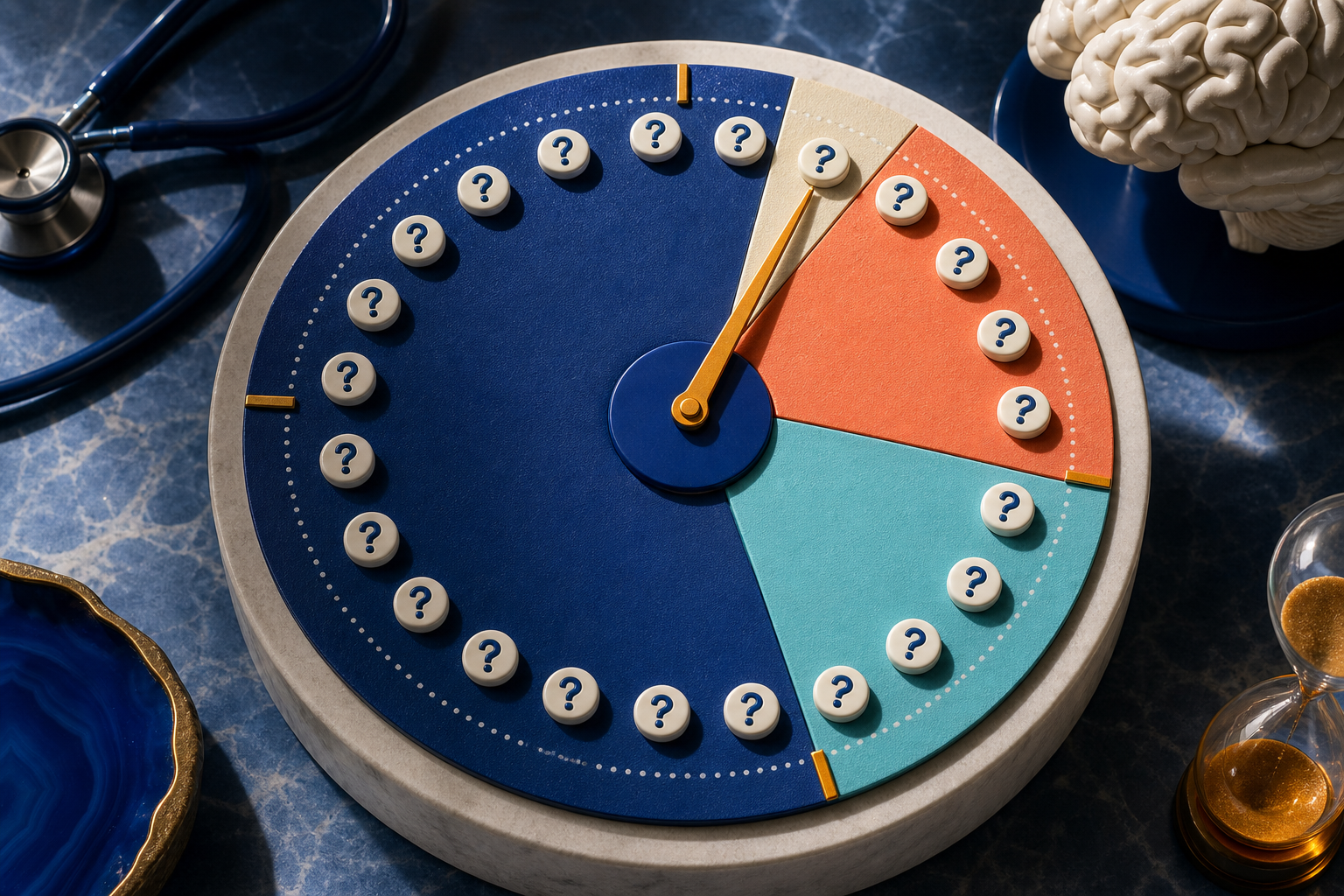
The following checkpoints are CoreStepPrep coaching recommendations, not official USMLE rules. Adjust the question targets to the number of items shown in the block.
| Time elapsed | Target position in an 18–20-item block | Corrective action if behind | |---|---:|---| | 10 minutes | Approximately 6–7 items completed | Stop rereading entire stems; identify the task and decisive findings first. | | 20 minutes | Approximately 12–14 completed | Limit any new difficult item to one focused reasoning pass before selecting and flagging. | | 25 minutes | No more than 3–5 items remain | Prioritize answering every remaining item over reviewing previous ones. | | 28 minutes | All items answered | Review only marked items with a specific unresolved issue. | | 30 minutes | Block closed | Record the pacing result after the session; do not pause during practice. |
Checking the clock after every question is distracting. Checking at 10-minute intervals gives you enough information to correct your trajectory without repeatedly breaking concentration.
If you fall behind, do not try to recover all the lost time on the next item. That produces avoidable errors. Recover gradually across the next three or four questions by shortening rereads, committing once you have enough evidence, and avoiding low-value answer changes.
Track three outcomes after each block:
- Did you answer every item?
- How many items remained at the 20- and 25-minute checkpoints?
- How many answers were changed during review, and how many changes went from correct to incorrect?
Those observations are more actionable than writing only “poor time management” in an error log.
Build cognitive stamina by extending high-quality work
Stamina does not mean enduring more hours at any cost. It means preserving your process as fatigue increases: reading the actual question, recognizing decisive clues, committing to an answer, and moving on.
Prolonged cognitive work can increase subjective fatigue before accuracy visibly deteriorates. A controlled study comparing 30-, 60-, and 90-minute cognitive tasks also found that subjective, behavioral, and neurophysiological measures did not change uniformly, supporting the use of more than one indicator when monitoring fatigue. The PubMed-indexed study on task duration and mental fatigue was not conducted with USMLE examinees, so it should not be treated as proof of a specific study schedule. It does support a practical principle: track both how you feel and how you perform.
After every multi-block session, record:
- block accuracy;
- unanswered or last-minute guessed items;
- average confidence before checking answers;
- perceived fatigue from 1 to 5;
- the dominant error pattern;
- food, caffeine, hydration, and break timing.
Look for repeated patterns. A learner whose accuracy falls after block 10 may need better break placement or more late-day practice. A learner whose accuracy remains stable but reports severe fatigue may need to simplify an overly effortful question process. A learner who maintains energy but repeatedly runs out of time has a pacing problem, not a stamina problem.
Practice breaks as part of the test
Breaks should be rehearsed, not improvised. Your plan must fit inside the available break pool without depending on extra time earned by finishing blocks or the tutorial early.
Because the current format contains many 30-minute blocks, taking a long break after every block is usually impractical. Instead, organize blocks into clusters and decide in advance which transitions will include a meaningful break.
Here are realistic starting templates:
| Exam | Suggested cluster pattern | Example planned breaks | |---|---|---| | Step 1 | 3 blocks / 3 / 3 / 2 / 2 / 1 | 7, 8, 12, 8, and 10 minutes; retain 10 minutes as reserve | | Step 2 CK | 3 blocks / 3 / 3 / 3 / 2 / 1 / 1 | 7, 8, 12, 10, 8, and 5 minutes; retain 5 minutes as reserve |
These are practical templates, not official schedules. Modify them according to bathroom needs, accommodations, meal timing, and your observed fatigue pattern. If you have approved testing accommodations, build simulations around the schedule specified in the USMLE test lengths and times guidance, rather than using a standard-day template.
During practice, use breaks exactly as you intend to use them on test day. Stand up, use the restroom when needed, drink a measured amount, eat familiar food, and return on schedule. Avoid reviewing notes, searching disputed questions, or discussing content. Those behaviors keep your attention attached to the previous block instead of resetting for the next one.
Test caffeine and meals during simulations. Do not introduce a larger caffeine dose, new supplement, unfamiliar energy drink, or unusually heavy lunch on exam day. The purpose of rehearsal is to remove variables.
Follow a staged full-length simulation plan
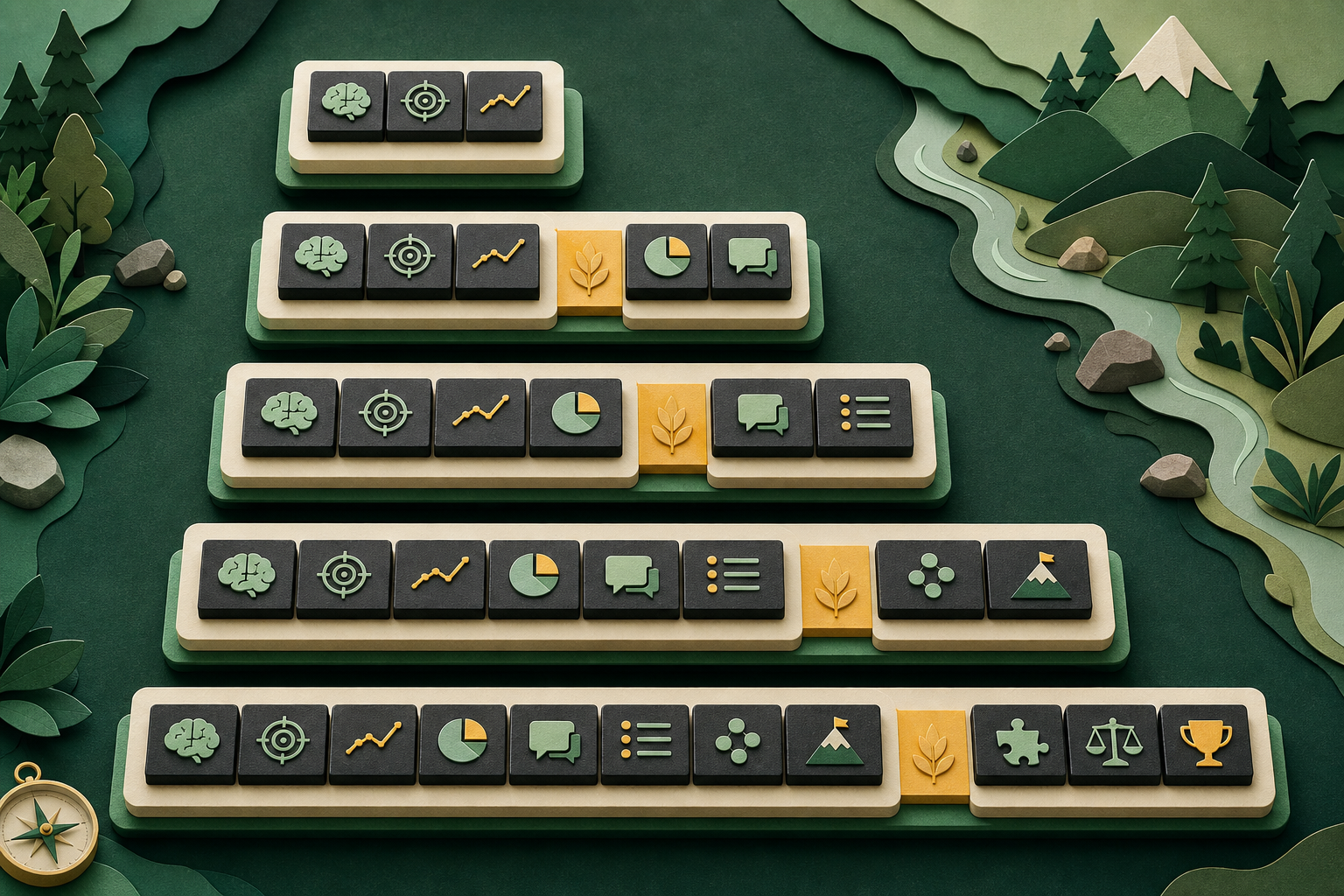
Jumping directly from two-block question sessions to a full testing day often produces exhaustion without teaching you how to improve. Use progressive overload instead.
| Stage | Simulation length | Primary objective | Advancement checkpoint | |---|---:|---|---| | 1: Block control | 3–4 blocks | Follow 10-, 20-, 25-, and 28-minute checkpoints | Complete every item in at least 90% of blocks across two sessions | | 2: Cluster control | 6–8 blocks | Maintain pacing through two or three work clusters | No recurring late-block rush; breaks remain within the planned budget | | 3: Late-day exposure | 10–12 blocks | Identify the hour when fatigue changes your behavior | Name the specific fatigue pattern and test one countermeasure | | 4: Near-full rehearsal | 12–14 blocks | Practice food, caffeine, clothing, environment, and breaks | Final third remains operationally controlled despite fatigue | | 5: Full simulation | 14 Step 1 or 16 Step 2 CK blocks | Reproduce the complete test-day sequence | Finish all blocks, stay within the break pool, and avoid major late-day process collapse |
Most learners do not need frequent full-length days. One early diagnostic simulation and one polished rehearsal may be more useful than repeatedly sacrificing review time to marathons. Complete the final full simulation early enough to recover and correct problems—often about seven to ten days before the exam—rather than immediately before test day.
For simulations, use representative mixed questions under strict conditions. Keep your phone inaccessible, do not pause block timers, and review answers only after the planned testing sequence ends. A simulation with pauses and immediate explanations may be a useful learning session, but it is not a valid stamina test.
Define progress by process stability
Scores naturally fluctuate with question difficulty, so readiness cannot depend on a single percentage. Use process checkpoints alongside performance data.
Before test day, aim to demonstrate the following across at least two long sessions:
- **Timing stability:** You reach the 20-minute checkpoint on pace in nearly every block.
- **Completion:** No items are left unanswered because of time.
- **Controlled review:** You do not repeatedly reopen questions without a specific reason.
- **Fatigue awareness:** You can identify when rushing, rereading, or indecision begins.
- **Break discipline:** Planned breaks stay within the total budget, including a reserve.
- **Late-day preservation:** Accuracy and decision quality in the final third are reasonably close to your earlier-block baseline.
A practical benchmark is to investigate any repeated late-day accuracy decline greater than about five percentage points relative to your own morning median. This is a coaching threshold, not a validated USMLE standard. Its purpose is to trigger analysis, not predict a score.
Fix the failure mode that is actually limiting you
**You finish comfortably but miss too many questions.** Your problem is probably not pacing. Slow down enough to identify the question’s task and review knowledge gaps.
**You are on pace until a few difficult items consume the block.** Use a stop rule: once you have completed a focused reasoning pass, select the best answer, flag the item, and continue.
**You perform well early and deteriorate late.** Add blocks progressively, test an earlier substantial break, and compare late-day error categories. Do not respond by doing full-length exams every weekend without analysis.
**You feel exhausted, but accuracy stays stable.** Your process may still be effective. Practice tolerating the sensation while using breaks to reset; do not interpret fatigue alone as failure.
**Your breaks repeatedly exceed the plan.** Rehearse the physical routine. Know which food is accessible, how long eating takes, and how quickly you can return to the testing position.
**Your practice environment is too comfortable.** Remove music, messaging, flexible pauses, and answer explanations between blocks. Stamina trained under interruption does not transfer cleanly to a controlled test day.
Final takeaways
- Train the current 30-minute USMLE block structure with checkpoints at 10, 20, 25, and 28 minutes.
- Extend from four blocks to a full day progressively instead of using repeated marathons as your primary training method.
- Track accuracy, timing, fatigue, and error type because no single measure captures cognitive stamina.
- Rehearse break timing, food, hydration, and caffeine under realistic conditions.
- Judge readiness by a stable process across the final blocks, not by whether the day feels easy.
Build your next study block with CoreStepPrep.