Build a Pharmacology Mechanism Map for USMLE
Build compact pharmacology mechanism maps from missed USMLE questions to connect drug targets, effects, indications, adverse effects, and contraindications.
Pharmacology becomes unmanageable when every drug is stored as an isolated list: mechanism, uses, toxicities, contraindications, and exceptions. That approach creates hundreds of disconnected facts—and it often fails when a USMLE question describes the physiology without naming the drug.
A better approach is to build a **pharmacology mechanism map**. Start with the drug’s target, trace the resulting physiologic changes, and then derive the likely indications, adverse effects, and contraindications. Each missed question becomes an opportunity to repair one link in that chain rather than add another page of notes.
The goal is not to create a pharmacology encyclopedia. It is to produce compact comparison maps that help you predict what a drug will do in an unfamiliar vignette.
Why mechanism maps outperform isolated drug lists
USMLE pharmacology questions rarely depend on name recognition alone. A vignette may ask you to identify a drug from its effect on a receptor, predict a complication from altered physiology, or choose between agents in the same class. The official USMLE Step 1 materials direct learners to the exam’s content outline and single-best-answer question format, reinforcing the need to apply foundational knowledge rather than merely recite it.
A mechanism map supports that application by organizing facts into causal relationships:
**Target → cellular action → organ effect → clinical use → adverse effect → contraindication**
This structure reduces the number of facts you must memorize independently. If a drug slows atrioventricular conduction, for example, that effect may help explain both a therapeutic use and a reason to avoid the drug in a patient with an existing conduction abnormality. One physiologic link can therefore answer several question types.
There is educational evidence supporting the components of this method, although no study proves that one specific map format is optimal for USMLE preparation. A randomized pilot study of concept maps in medical students found that mapping was feasible and helped learners integrate physiologic mechanisms and identify knowledge gaps. Separately, a systematic review of retrieval and distributed practice in health professions education found that most included experiments showed benefits from retrieval practice, distributed practice, or both.
**Evidence-backed principle:** organizing relationships and repeatedly retrieving them can support learning.
**Practical CoreStepPrep recommendation:** use a six-link map built from missed questions because it is compact enough to maintain during a demanding Step 1 or Step 2 CK study block.
The six-link mechanism map
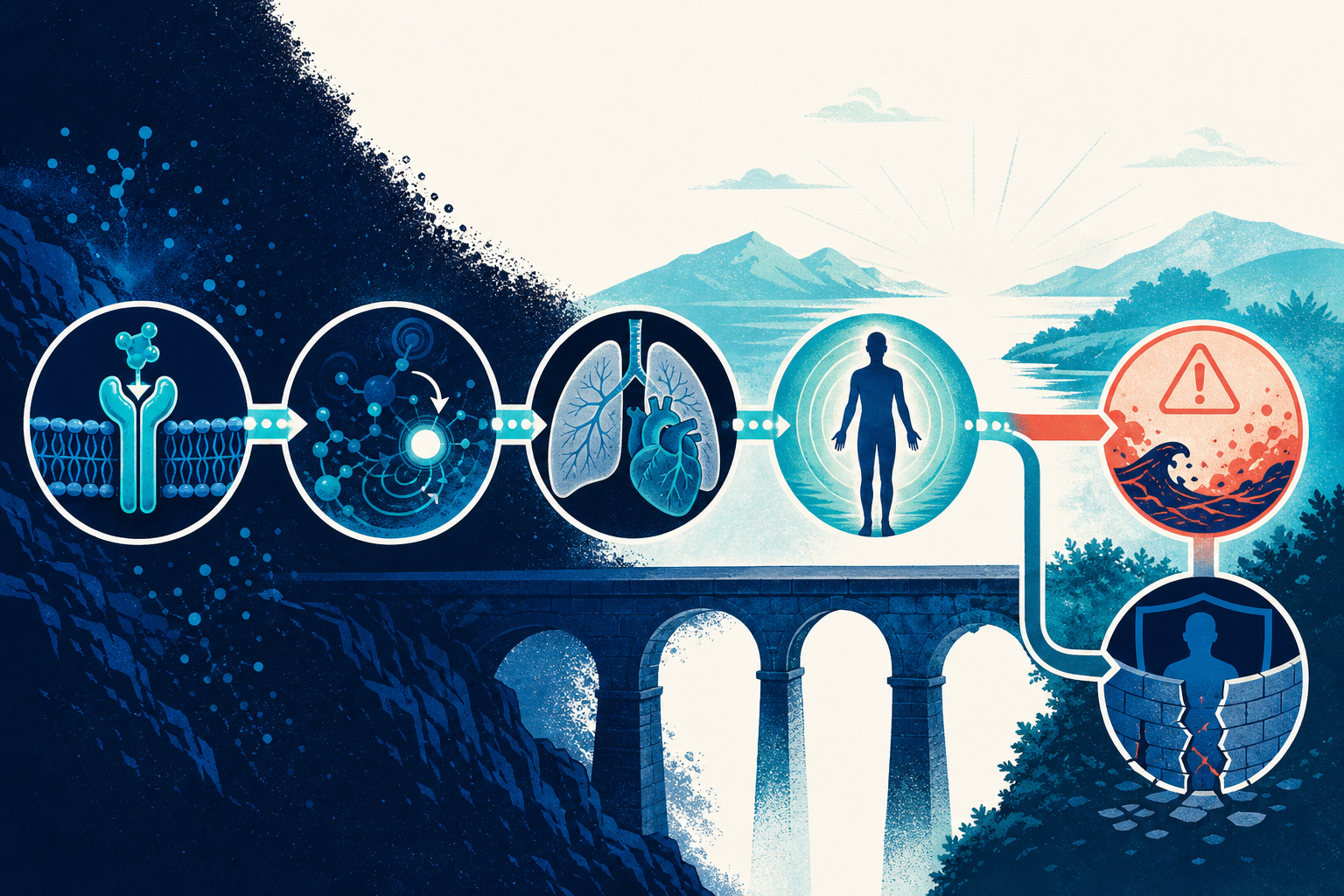
Use the same six prompts every time you analyze a drug or drug class:
- **Target:** What receptor, enzyme, ion channel, transporter, or organism-specific structure is affected?
- **Immediate action:** Is the target activated, blocked, inhibited, stabilized, depleted, or otherwise modified?
- **Physiologic effect:** What changes in signaling, organ function, hemodynamics, metabolism, or microbial survival follow?
- **Indications:** In which disease states is that physiologic change useful?
- **Adverse effects:** What happens when the intended mechanism becomes excessive or affects another tissue?
- **Contraindications and cautions:** Which patient characteristics make that effect dangerous?
Write each answer as a short phrase, not a paragraph. Your map should fit on one screen or one sheet of paper. If it does not, you are probably copying reference material rather than identifying testable relationships.
Add two optional branches only when they help distinguish answer choices:
- **Class exceptions:** selectivity, unique elimination, unusual toxicity, or additional receptor activity.
- **Rescue or reversal:** antidote, monitoring variable, or immediate response to toxicity.
Do not force these branches onto every map. Their value is discriminatory, not decorative.
Build each map from a missed question
Begin with the question you missed—not with a chapter heading such as “cardiovascular drugs.” Question-driven mapping keeps the work tied to actual reasoning failures.
Step 1: Identify the broken link
Before reading the full explanation, state why your answer failed. Common possibilities include:
- You did not know the target.
- You knew the mechanism but could not predict the organ effect.
- You recognized the indication but confused two members of a class.
- You knew the adverse effect but did not connect it to the mechanism.
- You ignored a comorbidity that made the drug unsafe.
- You changed a correct mechanism-based answer because another option looked familiar.
Label the miss with one of these categories. “Didn’t know pharmacology” is too vague to guide a repair.
Step 2: Write the shortest correct causal chain
Convert the explanation into arrows. A useful chain might look like this:
**receptor blockade → reduced second-messenger signaling → reduced organ response → therapeutic effect**
Then run the chain too far:
**excessive reduction in organ response → adverse effect**
Finally, introduce the patient:
**preexisting vulnerability + expected drug effect → contraindication or caution**
This “run the mechanism forward” step is the heart of the workflow. It transforms adverse effects and contraindications from arbitrary lists into predictable consequences.
Step 3: Add only the nearest competitors
Most maps should compare two to five drugs or subclasses. Choose competitors that could plausibly appear together as answer options.
Useful comparison axes include:
- receptor or tissue selectivity;
- agonist versus antagonist activity;
- central versus peripheral action;
- renal versus hepatic elimination;
- rapid versus prolonged action;
- pregnancy-related considerations;
- class-wide versus drug-specific toxicity.
Avoid adding every drug with the same suffix. A comparison map should clarify a decision, not display completeness.
A worked beta-blocker comparison map

Suppose you miss a question because you remember that beta-blockers reduce sympathetic effects but cannot distinguish a relatively beta-1-selective agent from a nonselective agent or a drug with additional alpha-1 blockade.
Start with the shared target. Beta-blockers antagonize beta-adrenergic receptors, while clinically important differences include receptor selectivity and additional vasodilating activity. A review of beta-blocker mechanisms and subclasses describes nonselective, beta-1-selective, and vasodilating generations of the class.
Your compact comparison map could be structured like this:
| Map branch | Shared class logic | High-yield comparison question | |---|---|---| | Target | Beta-adrenergic receptor antagonism | Which receptor subtypes are blocked? | | Cardiac effect | Reduced sympathetic cardiac stimulation | How much does selectivity matter in this patient? | | Vascular effect | Varies by agent and additional activity | Does the drug also promote vasodilation? | | Indication logic | Useful when reducing selected sympathetic effects benefits the condition | Which desired effect is the vignette testing? | | Adverse-effect logic | Excessive blockade predicts problems in susceptible tissues | Which organ system is already vulnerable? | | Contraindication logic | Match receptor distribution to the patient’s comorbidity | Would nonselective blockade create avoidable risk? |
Notice what this map does **not** contain: a long catalog of every beta-blocker and every possible use. It creates a decision framework. When reviewing your own resources, place only the two or three named agents that your missed question required under the appropriate subtype.
For Step 1, emphasize receptor subtype, signaling, and downstream physiology. For Step 2 CK, add the clinical decision layer: comorbidities, concurrent medications, monitoring, and the reason one member of a class may fit the patient better than another.
A realistic weekly mapping and review schedule
Mechanism mapping should sit inside question review, not become a separate art project. Use this schedule as a starting point and adjust it to your question volume.
| Timing | Task | Time limit | Output | |---|---|---:|---| | After each question block | Tag pharmacology misses by broken link | 1–2 minutes per miss | Target, physiology, indication, toxicity, or contraindication label | | End of the study day | Build or update maps for repeated or important misses | 15–25 minutes | One or two compact maps | | Next day | Redraw yesterday’s chains from memory | 5–10 minutes | Blank-page retrieval check | | Three to four days later | Answer comparison prompts without notes | 10 minutes | Oral or written class distinctions | | End of the week | Merge duplicates and test maps with vignettes | 20–30 minutes | Cleaner maps plus a short weak-link list |
The time limits matter. If one map consumes an hour, you are probably formatting instead of learning.
Retrieval must also be effortful enough to expose uncertainty. In a pharmacy curriculum study, a redesign combining repeated retrieval, mastery, and alignment with therapeutic coursework was associated with better performance on a comprehensive medication examination than the prior curriculum. The authors did not isolate mechanism mapping as the cause, but the pharmacy retrieval-practice study supports repeatedly recalling medication knowledge rather than relying on passive review.
Review the map as questions, not as a poster
Looking at a completed map can create familiarity without recall. Cover sections and interrogate the chain from different directions.
Use prompts such as:
- “If this receptor is blocked, what changes immediately?”
- “Which adverse effect is an extension of the therapeutic effect?”
- “What patient feature would make this mechanism dangerous?”
- “Two drugs share an indication. What target or tissue difference separates them?”
- “If the vignette gives the adverse effect first, can I work backward to the class?”
- “What would change if the patient had renal impairment, liver disease, pregnancy, or a conduction abnormality?”
Bidirectional retrieval is especially useful. Do not always move from drug to effect. Practice moving from toxicity to mechanism, contraindication to physiology, and clinical presentation to the most likely target.
Progress checkpoints that show whether the maps are working
Judge the method by question performance, not by the number of pages produced.
After one week
You should be able to redraw the central causal chain for most new maps without looking. If you remember drug names but not arrows, shorten the map and rewrite each connection as a cause-and-effect statement.
After two weeks
Track whether repeated misses in the same drug class are decreasing. A useful checkpoint is not “I reviewed autonomic pharmacology.” It is “I no longer confuse target selectivity with the downstream organ effect in autonomic questions.”
After three to four weeks
You should increasingly recognize mechanisms in unfamiliar vignettes. Review a random set of pharmacology questions and record the first link at which your reasoning breaks. If most errors still occur at the target level, you need foundational retrieval. If errors occur at contraindications, add more patient-specific branches rather than more mechanism detail.
Use a simple dashboard:
- percentage of pharmacology misses caused by unknown targets;
- percentage caused by failed physiologic prediction;
- percentage caused by class confusion;
- number of repeated misses after a map was reviewed;
- number of maps that can be reproduced from memory.
These measures tell you what to change next.
Failure modes that turn mapping into busywork
**Making a map for every drug:** Reserve maps for missed questions, recurring confusions, and classes with meaningful comparisons. Use simple retrieval cards for isolated facts.
**Copying complete reference tables:** Your map should preserve decision-relevant contrasts. Copying everything hides the mechanism under detail.
**Using arrows without explaining them:** Every arrow should be readable as “this causes that.” If you cannot explain the causal link aloud, the arrow is only decoration.
**Reviewing visually but never retrieving:** Close the map and redraw it. Then answer a vignette that requires the same relationship.
**Treating all adverse effects as mechanism-derived:** Many are predictable from pharmacology, but some are idiosyncratic, metabolite-related, or unique to one agent. Mark those as exceptions instead of forcing a false causal story.
**Ignoring Step 1 versus Step 2 CK emphasis:** Step 1 maps should foreground targets and pathways. Step 2 CK maps should retain that foundation while highlighting patient selection, competing risks, monitoring, and contraindications.
**Allowing maps to multiply indefinitely:** Merge maps when they share a target or decision point. Archive maps you can retrieve reliably and continue reviewing only their highest-risk distinctions.
Final takeaways
- Build pharmacology knowledge as a causal chain from target to patient-level consequences.
- Create maps from missed questions and identify the exact broken reasoning link first.
- Compare only the nearest competing drugs or subclasses.
- Review maps through spaced, bidirectional retrieval rather than repeated viewing.
- Measure success by fewer repeated errors and better predictions in unfamiliar vignettes—not by map volume.
Turn your next pharmacology miss into a six-link mechanism map, then test it before the details fade. Build your next study block with CoreStepPrep.